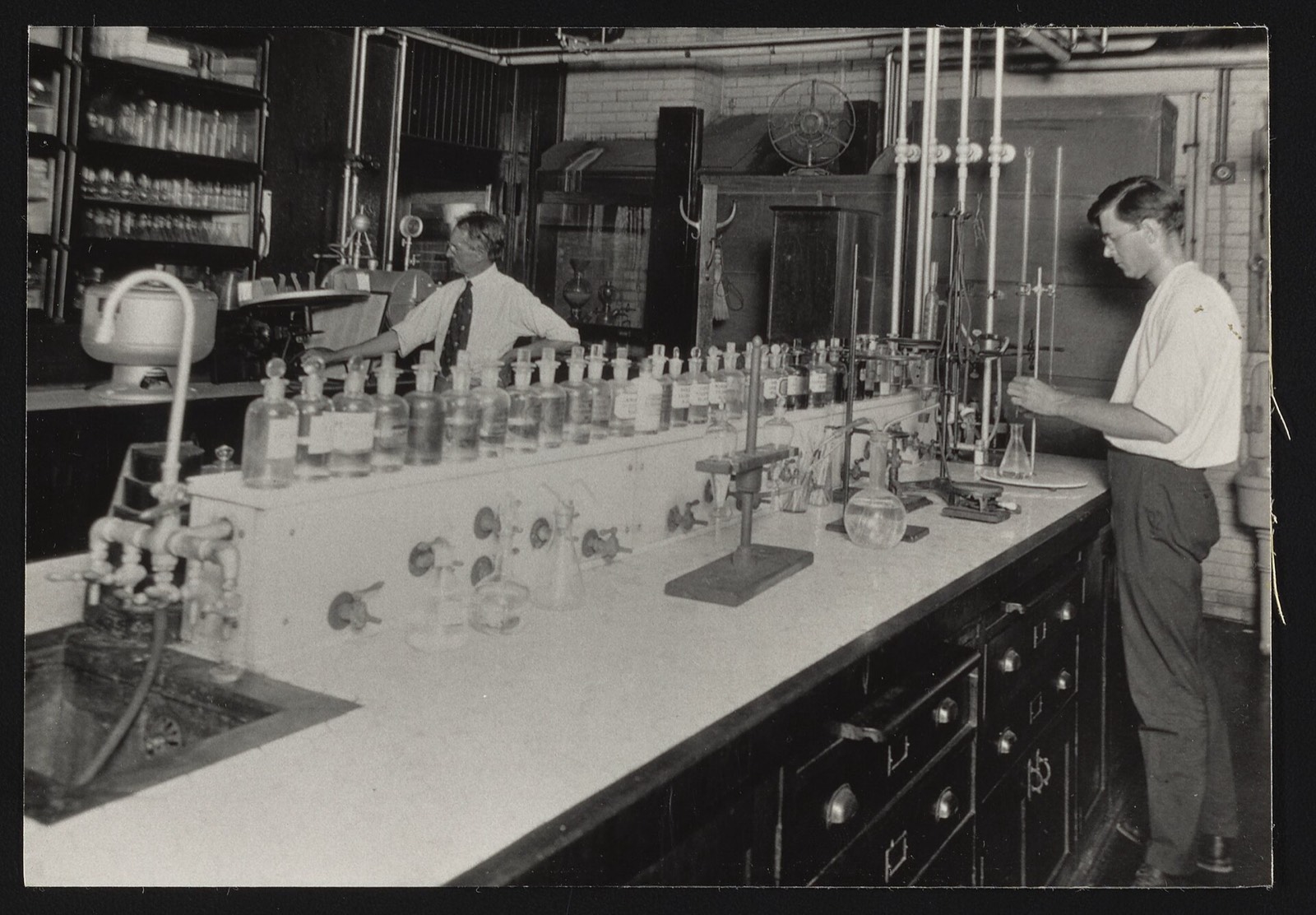
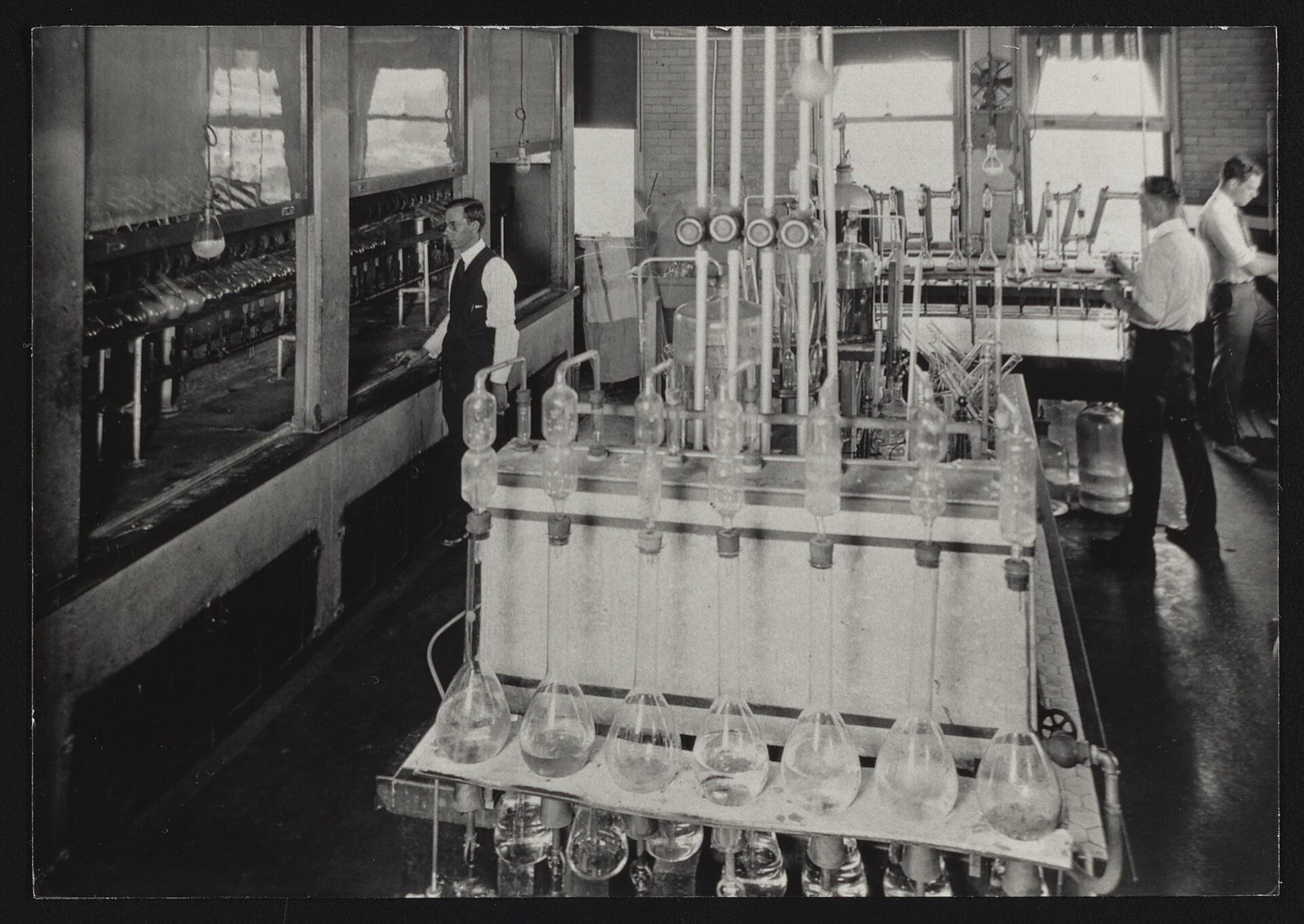
Two chemists behind a bench crowded with flasks, funnels and bottles in the Bureau of Chemistry Carbohydrate Laboratory, 1910s

Middle Class Science

Profitable, founder-owned science businesses

Academia, industry, or a venture-backed company. Early-career scientists deserve a fourth door.

Story
Carbohydrate Laboratory, USDA Bureau of Chemistry, 1913–1928 · Science History Institute
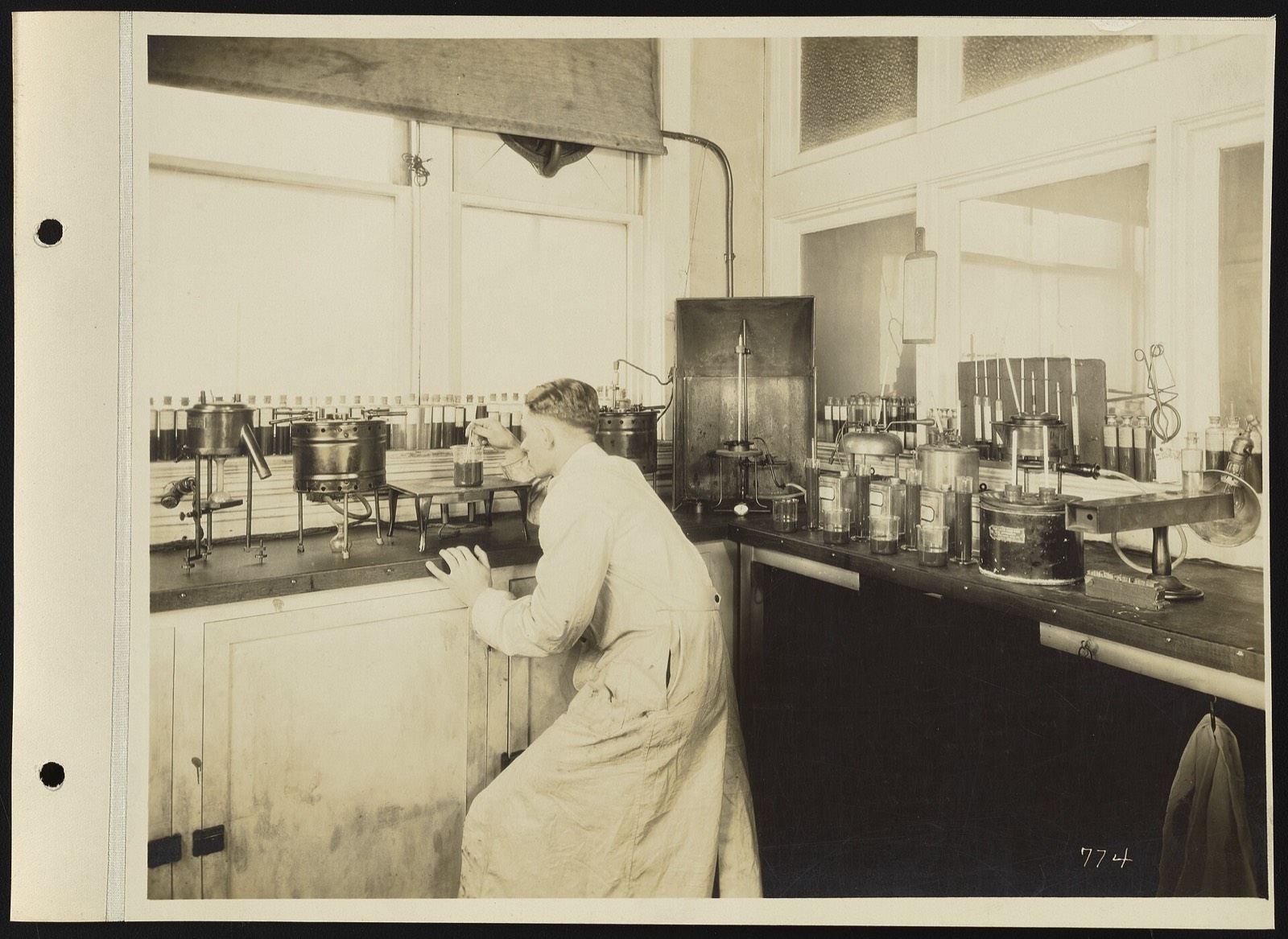
A chemist in a long white coat leaning over a bench of apparatus at the Dearborn Chemical Company laboratory
The story/01 of 06

Grad students are an unhappy bunch these days.

The PhD hero's journey has always been fraught with hierarchical dragons and a vow of poverty, but pessimism seems more ubiquitous than ever. A PhD used to be a career bond with a guaranteed credentialed payout on maturity. Stamps of approval still matter, but committing to a 5+ year program feels like a bigger gamble when the latest frontier AI model unlocks unheard-of capabilities on a monthly cadence.

Al Herman at the Dearborn Chemical Company laboratory, Chicago, early 20th c. · Science History Institute
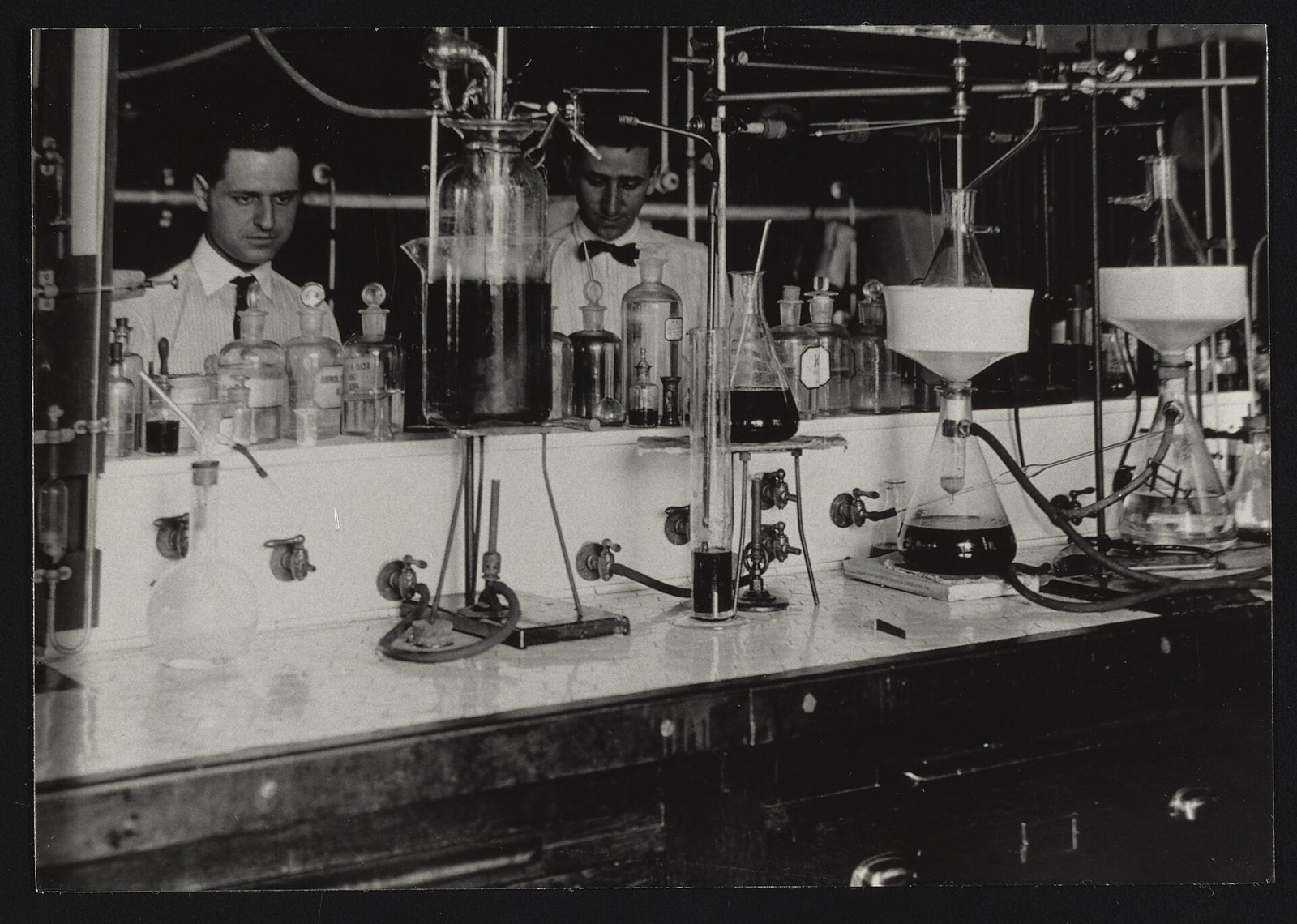
Two chemists at a long bench of bottles and burettes in the Bureau of Chemistry Drug Laboratory, 1900s–1920s
The story/02 of 06

Three recognized options: stay in academia, join industry, or raise venture capital.

PhDs quickly recognize that a PI's job, despite its status, is often more administrative than scientific. Even for those who want to stay the course, recent funding cuts have dried up postdoc and junior faculty roles. Industry pays better but often means giving up public-facing work and control over time and focus. In an act of desperation, many ambitious PhDs parlay the name recognition of their lab to raise venture capital, when what they truly seek is autonomy over their career.

The traditional pipeline invests heavily, frequently $500k to train a single scientist, yet leaves them with a surprisingly constrained set of attractive options. This isn't the universities' fault. They're doing the best they can with the resources and incentives available to them.

Drug Laboratory, USDA Bureau of Chemistry, 1901–1928 · Science History Institute
A laboratory bench with shelves of glassware and a row of balances at the Hospital of the Rockefeller Institute
The story/03 of 06

For a young scientist, VC is often the best choice on a list of constrained options. That is the problem.

Funneling so much scientific talent into venture is suboptimal for the asset class and for society. With few exceptions (see Focused Research Organizations), the lack of career optionality produces "passion entropy": an incalculable amount of expertise and energy lost as scientists abandon their personal ambitions to chase unicorn-scale ideas.

Taking a hard turn off the prestige highway is scary for someone trained to follow the rules since an early age. The venture ecosystem has reputationally derisked it with co-founder matching, campus innovation centers, meetups, retreats, bootcamps, incubators, accelerators, and financing. At the same time, VCs routinely dismiss "science projects" and "lifestyle businesses" because they don't fit a go-big-or-go-home model. That's not VCs' fault either. Their funds can't absorb a 90% failure rate without a massive winner.

Laboratory bench, Hospital of the Rockefeller Institute for Medical Research, early 20th c. · Science History Institute
A small analytical laboratory with glassware on a bench; one researcher seated at a desk, another standing and blowing into a glass apparatus
The story/04 of 06

Between a science project and a unicorn, there are almost no supported options.

VCs seeded the category for software unicorns, but there are also plenty of $10M to $100M ARR software "lifestyle" businesses (Midjourney, Kit, 37signals) that are just plain old good businesses. I'm not the first to say we need more kinds of businesses in science. We need personal businesses that people will bleed for because it's their life's work. The "BBN", a strong proposal in search of a catchier name, is one such form.

What's missing is a category of science businesses where reaching profitability, serving a valuable niche, and retaining ownership over your work are valid measures of success.

Fixed Nitrogen Research Laboratory, nitrogen analytical lab, c. 1920–1950 · Science History Institute
A chemist seated at a microscope with his back to the camera, before a wall of sample jars in the Bureau of Chemistry Water and Beverage Laboratory
The story/05 of 06

No one sees these opportunities like young scientists. They are in the trenches, figuring out what is broken.

We've seen firsthand how dedicated students are to translating their work out of academia. Freed from the shackles of delivering 1000x ROI, founders can focus on a mission-aligned scientific pursuit: standing up a kick-ass CRO like Plasmidsaurus, making niche antibodies like Bioventix, or selling customized cell lines like Applied StemCell.

LLMs reduce the operating costs of these businesses: a scrappy founder can quickly learn a new function, like data analysis, instead of hiring for it. Profitable, sub-venture-scale businesses enable an "infinite game" of dedicating time and resources to R&D, or whatever pursuits the founder sees fit.

Water and Beverage Laboratory, USDA Bureau of Chemistry, 1901–1928 · Science History Institute
A row of gas-washing flasks on a bench with chemists working in the Bureau of Chemistry Nitrogen Laboratory, 1900s–1920s
The story/06 of 06

VC already authored the blueprint for the supportive infrastructure. Science needs its own edition.

A home for scientific misfits, with shared lab space, help navigating IP, a variety of financial support options, and a tribe of equals, can bring Middle Class Science to life, the scientific answer to the middle class for startups. Forcing our most ambitious early-career scientists to choose between academia, industry, and venture-scale businesses is too narrow.

Nitrogen Laboratory, USDA Bureau of Chemistry, 1901–1928 · Science History Institute
Interactive · The gap

Where does your idea land?

Drag along the spectrum from a merely profitable idea to a venture-scale return. The dashed stretch is where almost no supported options exist today.

Academia The gap · no on-ramp Venture scale
Zone

What supports you here

What counts as success

Interactive · Four paths

What each door gives, what it costs, and who built the on-ramp.

Three of these paths have decades of infrastructure behind them. The fourth is the one this essay is about.

What you get
What it costs
Who built the on-ramp
Why it matters

Good for the scientist. Good for society.

Middle Class Science

Read the full essay

Grad students are an unhappy bunch these days. The PhD hero's journey has always been fraught with hierarchical dragons and a vow of poverty, but pessimism seems more ubiquitous than ever. A PhD used to be a career bond with a guaranteed credentialed payout on maturity. Stamps of approval still matter, but committing to a 5+ year program feels like a bigger gamble when the latest frontier AI model unlocks previously unheard of capabilities on a monthly cadence.

The three recognized options offered to young scientists are: continue in academia, join industry, or found a venture-backed company. PhDs quickly recognize that a PI's job, despite its status, is often more administrative than scientific. Even if they wanted to stay the course, recent funding cuts have dried up postdoc and junior faculty roles anyway. Industry offers a more lucrative path, but it often means sacrificing public-facing work and control over time and focus. In an act of desperation, many ambitious PhDs parlay the name recognition of their lab to raise venture capital when what they truly seek is autonomy over their career. The traditional academic pipeline invests heavily, frequently $500k to train a single scientist, yet the current ecosystem leaves them with a surprisingly constrained set of attractive options. To be clear, this isn't the universities' fault. They're doing the best they can with the resources and incentives available to them.

For a young scientist, VC is often the best choice on a list of constrained options. Funneling so much of our scientific talent into VC, however, is suboptimal for the asset class and society at large. With few exceptions (see Focused Research Organizations), the lack of career optionality results in "passion entropy," where an incalculable amount of expertise and energy is lost as scientists abandon their personal ambitions to pursue unicorn-scale ideas.

For a scientist trained to follow the rules since an early age, taking a hard turn off the prestige highway is scary. The venture ecosystem has reputationally derisked this with co-founder matching, campus innovation centers, meetups, retreats, bootcamps, incubators, accelerators, and, of course, financing. At the same time, VCs routinely dismiss "science projects" and "lifestyle businesses" because they don't fit into their go-big-or-go-home financial model. This is not VCs' fault either. Their funds can't absorb a 90% failure rate without a massive winner. But while the spectrum of >0 profitable ideas and venture scaled returns is wide, there are almost no supported options in between.

While VCs have seeded the category for software unicorns, there are also plenty of $10M to $100M ARR software "lifestyle" businesses (e.g., Midjourney, Kit, and 37signals) that are just plain old good businesses. I'm not the first to say we need more kinds of businesses in science. We need personal businesses that people will bleed for because it's their life's work. The "BBN" (a strong proposal in search of a catchier name) is one such form. What's missing is a category of science businesses where reaching profitability, serving a valuable niche, and retaining ownership over your work are valid measures of success.

No one sees these opportunities like young scientists. They are in the trenches figuring it out and have the most familiarity with what is broken. We've seen firsthand how dedicated students are to translating their work out of academia to the outside world. Freed from the shackles of delivering 1000x ROI, founders can focus on a mission-aligned scientific pursuit like standing up a kick-ass CRO like Plasmidsaurus, making niche antibodies like Bioventix, or selling customized cell lines like Applied StemCell. LLMs reduce the operational costs of these businesses because a scrappy founder can quickly learn a new function, like data analysis, that they would have previously needed to hire someone else to do. These profitable, sub venture-scale businesses enable an "infinite game" to dedicate time and resources to R&D or whatever pursuits they see fit. It's good for the scientist to have ownership over their time and good for society to create profitable scientific services that would otherwise be unavailable, expensive, or slow.

VC has already authored the blueprint for the supportive infrastructure needed to bring things to life and justify a path less traveled. Creating a home for scientific misfits with shared lab space, help navigating IP, a variety of financial support options, and a tribe of equals can bring Middle Class Science to life, the scientific answer to the middle class for startups. Forcing our most ambitious early-career scientists to choose between academia, industry, and venture-scale businesses is too narrow.

For scientists who have started, or want to start, a business like this, what's holding you back?
For university and tech-transfer teams, where do promising projects fall outside the available pathways?
For funders and investors, what models elsewhere should we learn from?
An essay from Fulcrum Science.